Public Space Design
Sustainable Urban Design Concept: Study Abroad Project in Barcelona, Spain
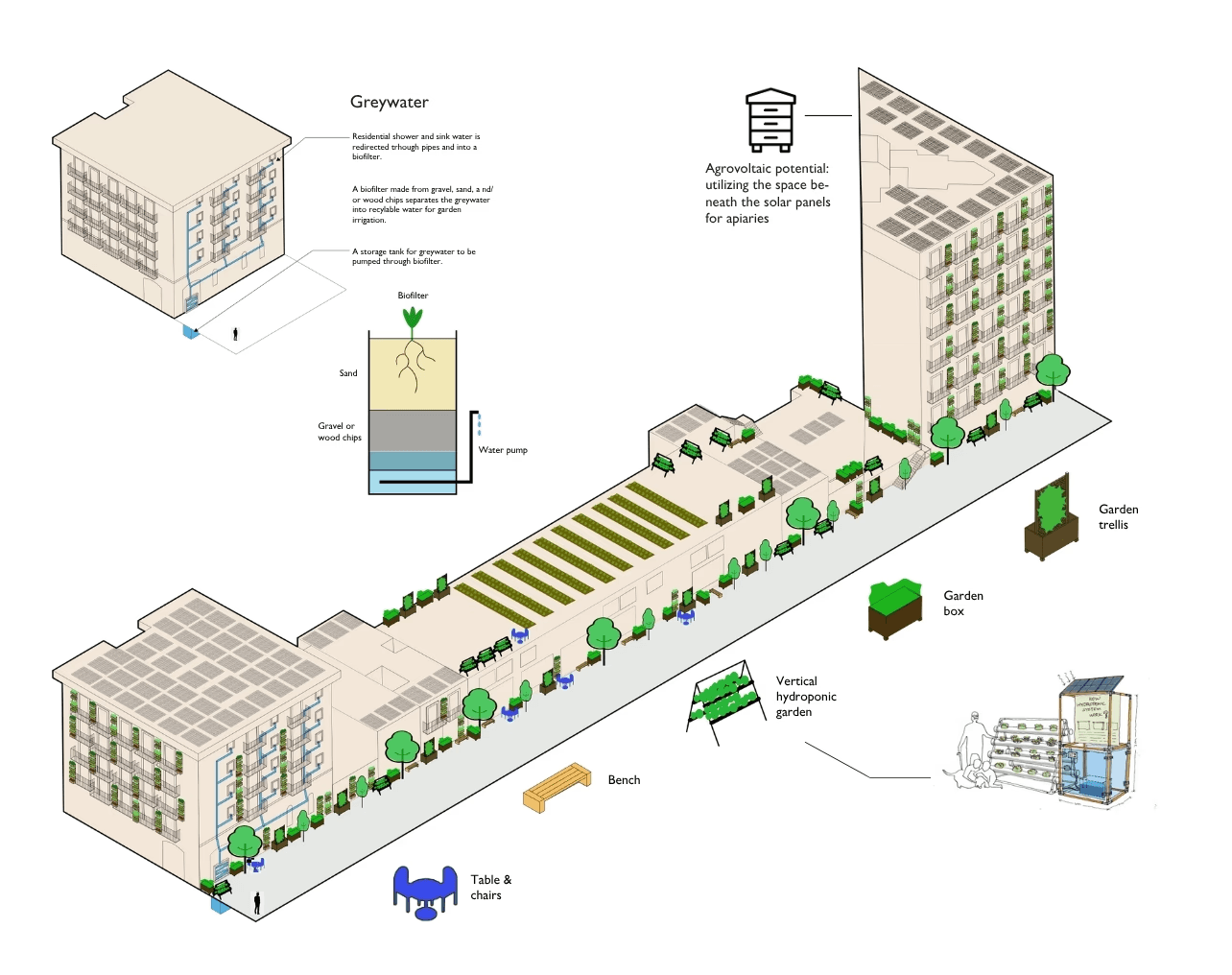
This project transforms Passetge de Bofill, a small alley in Barcelona’s Eixample district, into a closed loop sustainability hub. The design integrates systems for greywater reuse, vertical gardens, solar energy, composting, and community managed resources to create a self-sustaining micro infrastructure. The concept demonstrates how underused urban spaces can generate renewable energy, produce fresh food, reduce costs, and provide a replicable model for sustainable city living.
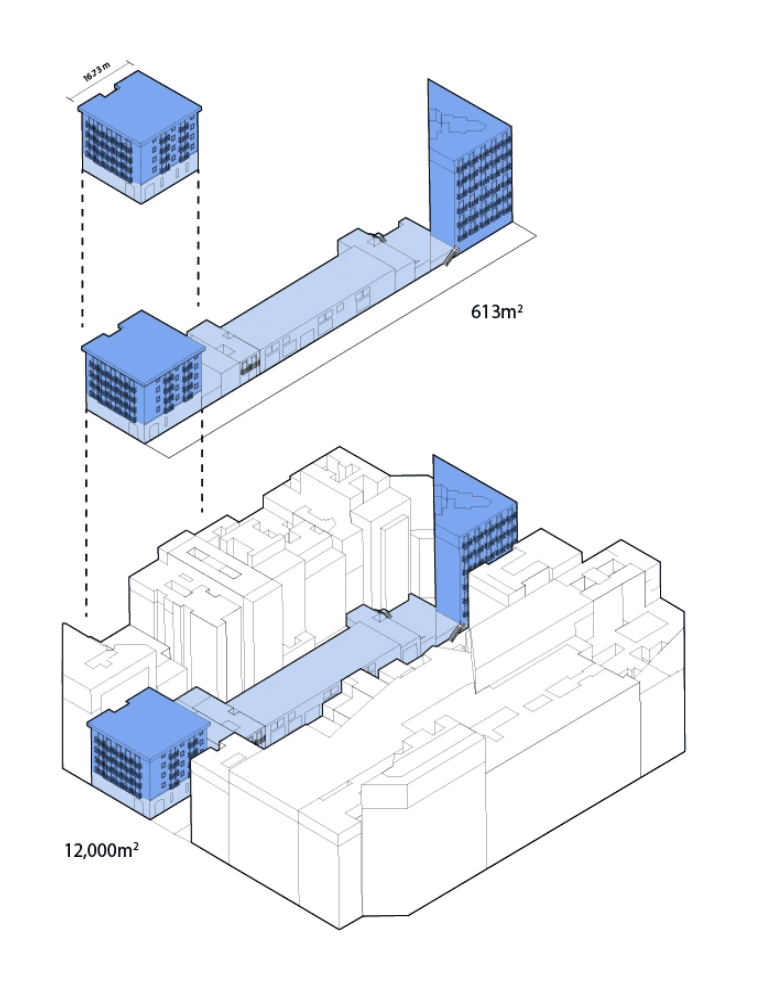
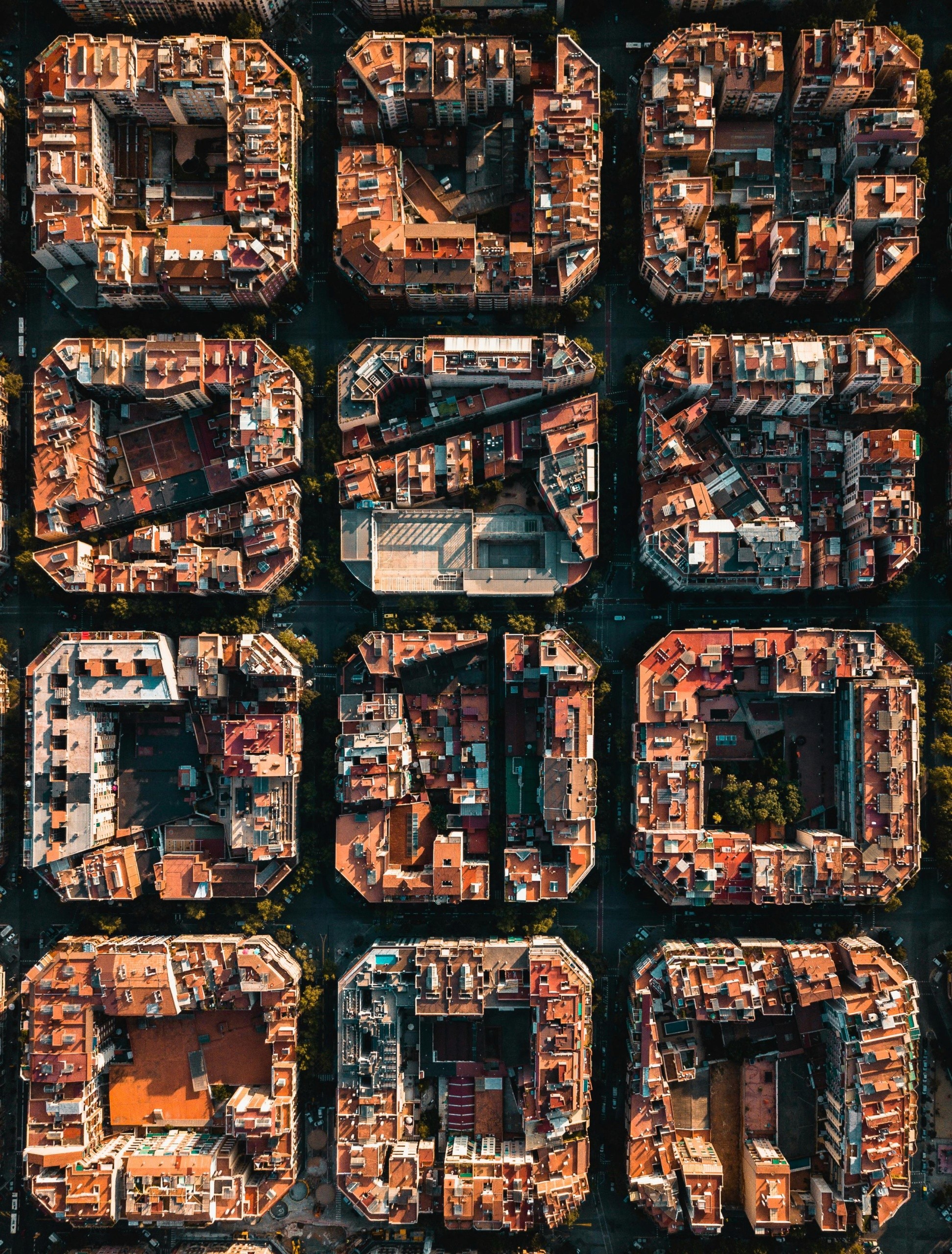
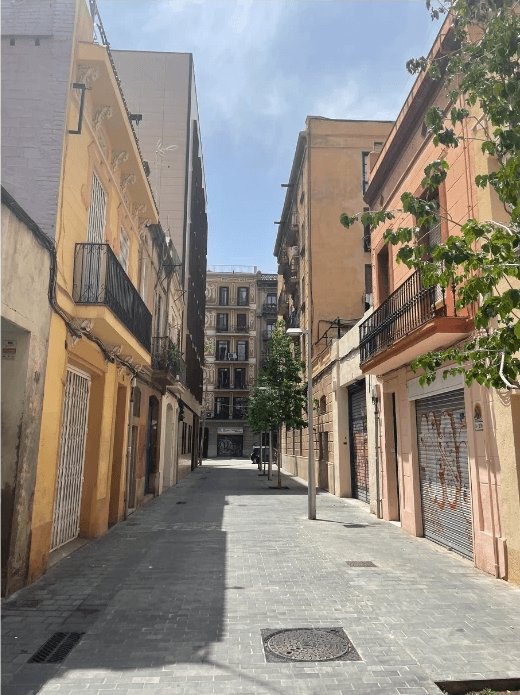
Although centrally located, Passetge de Bofill is an underutilized space with little visual or functional value. It contains trees, lamp posts, and trash cans, suggesting an attempt to establish it as a public area, but it lacks engaging features or meaningful programming. The surrounding apartments and businesses produce large amounts of greywater and organic waste, which are currently disposed of without being reused. At the same time, local residents face increasing utility bills and limited access to fresh, affordable food. The alley holds untapped potential but currently functions as an inactive and overlooked corridor.
The proposed solution is to transform Passetge de Bofill into a vibrant, self-sustaining public space that directly serves the surrounding community. By collecting greywater from nearby apartments and the local laundromat and filtering it on-site, the project can meet the 4,000-gallon daily irrigation requirement without spending on water. Rainwater can also be harvested to supplement this supply. The space would support vertical hydroponic gardens capable of producing more than enough fresh produce to meet community needs, cutting food costs significantly. Rooftop solar panels across the block would power essential systems such as lighting, pumps, and water filtration, with surplus energy sold back to the grid for additional revenue. Compost bins would process organic waste into nutrient-rich soil for the gardens, closing the resource loop and reducing landfill waste. Most importantly, the systems would be run and maintained by community members, fostering local ownership, social connection, and long-term resilience. This model offers a practical, economically sound, and easily scalable approach to turning underused alleys into productive urban assets.